
Design@UBalt Hub Redesign
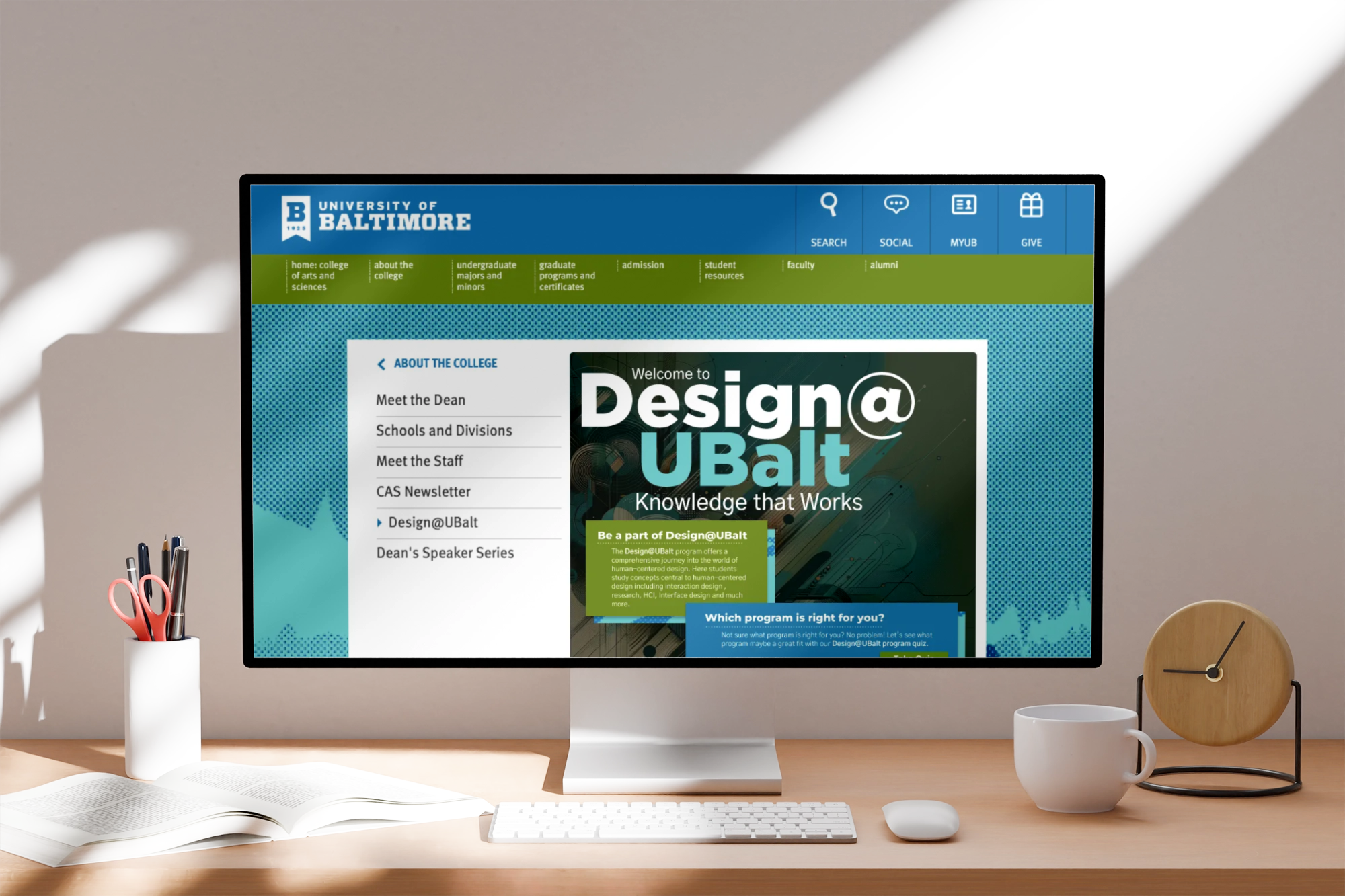
Design@UBalt Hub was a graduate school redesign project created to make the University of Baltimore’s design program website more engaging and easier to use. The original site needed a stronger way to showcase the school’s design programs and help prospective students find the right path.
The redesign introduced a more interactive experience through a program quiz that helped users explore academic options based on their interests and goals. The project included competitive analysis, stakeholder interviews, paper prototypes, wireframes, high-fidelity screens, a clickable Figma prototype, and usability testing.
Client: University of Baltimore
Project Type: Graduate School Project
Year: 2023
Role: UX/UI Designer
Platform: Responsive website prototype
Focus: Website redesign, student engagement, information architecture, interactive quiz design, accessibility, usability testing
Tools Used: Figma, Illustrator, Unsplash
The Problem
The original Design@UBalt website did not fully reflect the energy of the design programs. It also lacked interactive elements that could help prospective students explore programs in a more personal and engaging way.
The Goal
The goal was to create a clearer and more inviting website experience that made it easier for prospective students to learn about the design programs, understand their options, and find a program that matched their interests.
My Role
I worked on the UX and UI design process, including research, paper prototyping, wireframes, visual design, interactive quiz planning, prototyping, and usability testing. The focus was to make the site feel more useful, engaging, and easier to navigate.
Key Features
-
Interactive program quiz
Helped students explore design programs based on their interests and academic goals.
-
Clearer navigation
Made it easier for users to move through program information.
-
Program discovery flow
Guided prospective students from general interest to more specific program options.
-
High-fidelity prototype
Showed how the final redesigned experience would look and function.
-
Accessibility and usability improvements
Focused on clearer layouts, better user flow, and easier content discovery.
The design process included:
Researching university and design program websites
Reviewing the original Design@UBalt site experience
Conducting competitive analysis and stakeholder interviews
Planning a clearer user flow for prospective students
Sketching early page layouts and quiz ideas
Creating paper prototypes and wireframes
Designing high-fidelity screens in Figma
Building a clickable prototype
Testing the prototype and refining the design based on feedback